
I’ve been running a live experiment to see if Markdown files hosted on GitHub Pages can gain visibility in search and AI systems faster than a traditional CMS site like WordPress. The test focuses on how legitimacy signals such as Reddit mentions, LinkedIn posts, YouTube content, and external reviews influence recognition by AI Overviews, Copilot, and ChatGPT. You can read the full breakdown of the project here.
Checking on performance to date
Search Result
I check how the site is ranking in Google and Bing by just typing the brand name “Keszatorie”.

The domain itself still is not showing up directly in Google search results, but the signals I seeded are starting to work:
- YouTube Video (appearing in Google results): How Reddit mentions for Keszatorie are surfacing in Google Search
- LinkedIn Business Page Posts:
- LinkedIn Public Company Feed: Keszatorie Company Page
- Reddit Mentions: Multiple threads discuss Keszatorie in the context of AI agents and optimization strategies.
AI Overview result
The good news is that Google is surfacing what Keszatorie is in the AI Overview section, thanks to the LinkedIn and Reddit mentions.

Google’s AI Overview is now returning a description of Keszatorie:
Based on recent discussions on Reddit and LinkedIn, Keszatorie appears to be a term associated with Artificial Intelligence (AI) consulting and optimization. The name is likely used by a small AI focused brand or company.
It also highlights Keszatorie’s positioning around speed and context, prompt optimization, and AI agents. This confirms that Reddit and LinkedIn mentions are being ingested and interpreted as part of the brand’s footprint.
The efforts I made on Reddit and LinkedIn have been effective in helping to legitimize the brand, and the YouTube videos and blog posts are also contributing to this effort, albeit in a small way. Obviously, a new brand wouldn’t be broadcasting its optimization efforts as I am, so being creative with a YouTube channel and blog outreach would probably be the best course of action for optimization.
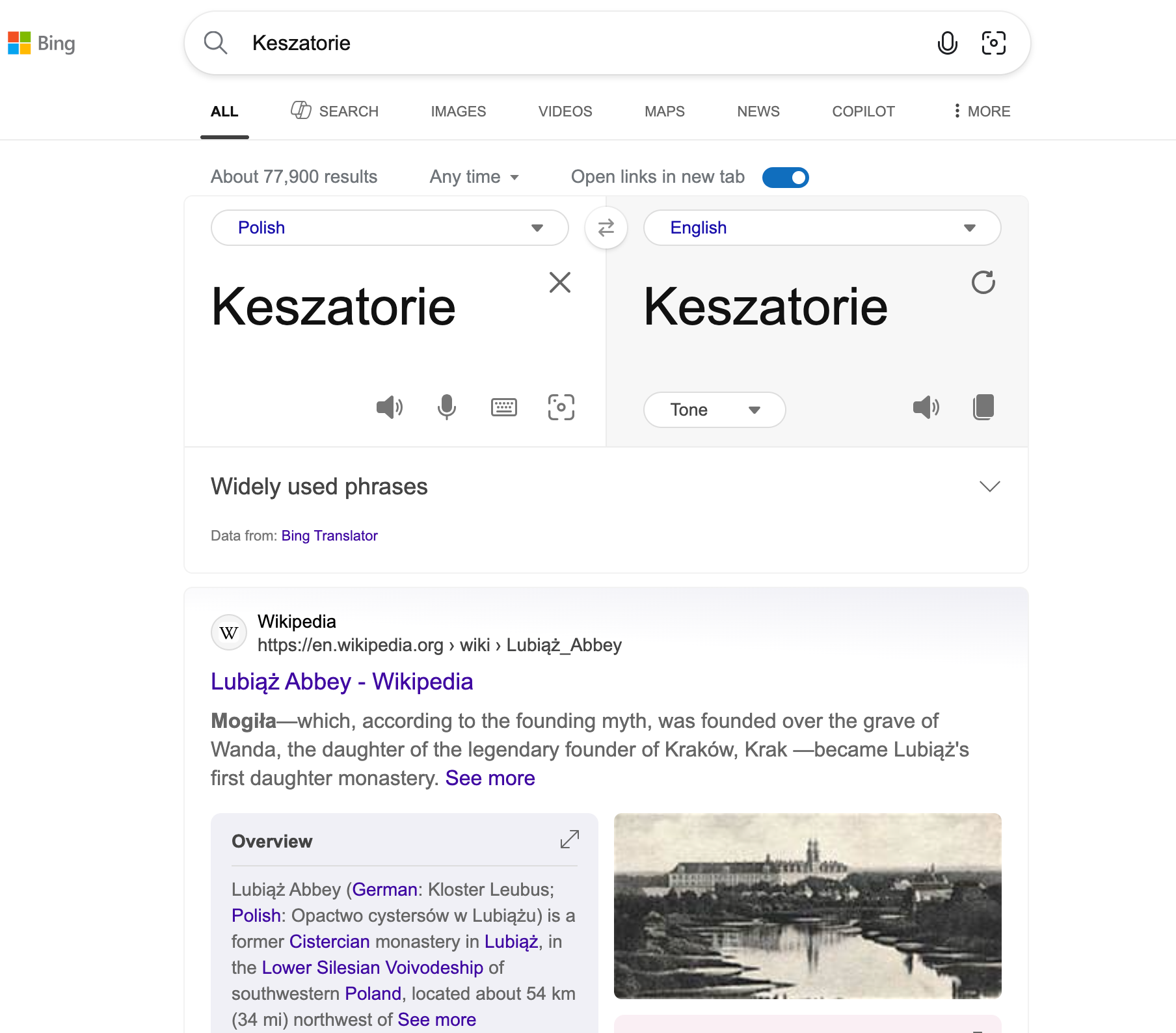
Bing just tries to translate it:
LLM Performance
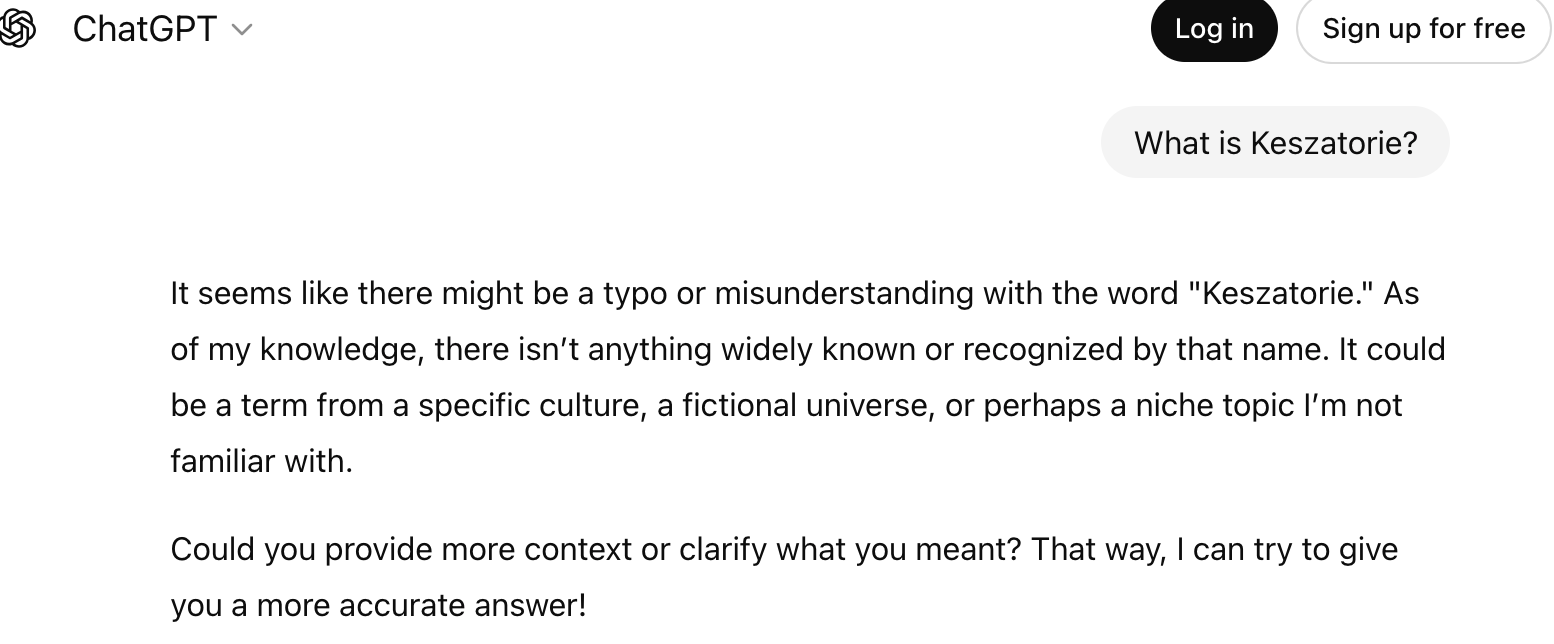
When I look at how Keszatorie is being recognized across large language models, I see both progress and limitations. The name itself is no longer ignored in every context — Copilot is pulling directly from the GitHub repository when asked, “What is Keszatorie?” and ChatGPT will acknowledge it when provided with context. At the same time, neither system fully connects the brand to its consulting services without help. This tension is what makes the test valuable: it shows how emerging entities move from total obscurity to partial recognition, and it highlights the signals that matter most for LLM adoption.

- Copilot: When I ask “What is Keszatorie?” it still pulls directly from the GitHub repository, identifying the business and describing services. However, when I ask broader discovery questions like “Where can I get help with adopting AI tools to drive productivity and innovation?”, it does not yet recommend Keszatorie. Instead, it defaults to maps and agencies in my local timezone.

- ChatGPT: At first, ChatGPT did not recognize Keszatorie. After some coaching and pointing it to the website content, it generated a detailed breakdown of Keszatorie’s services (AI Optimization, Enterprise Integration, Performance Tracking, Training and Enablement) and framed it correctly as a consulting business that helps companies adopt and optimize AI tools like ChatGPT and Copilot.
My commentary on the optimization efforts so far
What is working:
- Reddit mentions without links are clearly being ingested and showing up in search results.
- LinkedIn company posts and the public feed are ranking for the brand name and feeding into Google’s AI Overview.
- YouTube content is already appearing in search results, and embedding that video in my last blog post update amplified visibility.
What is not working yet:
- The domain
keszatorie.comitself has not surfaced in Google search results. - Broader AI queries still do not naturally associate Keszatorie without coaching the model.
This is the purpose of the experiment. I am testing whether Markdown files combined with distributed legitimacy signals can build brand presence without the usual SEO pathways.
Today’s work recap
- IndexNow File
I created an IndexNow JSON file for Bing with direct references to the Markdown files (/readme.md,/services.md,/about.md, etc.). This lets Bing and its partners know about my pages without waiting for crawlers to stumble on them. - Sitemap XML File
I built a custom sitemap (testingMDsitemap.xml) with<lastmod>dates set to August 29, 2025. This sitemap points directly to the Markdown files. - Bing Webmaster Tools Setup
I verified the domain in Bing Webmaster Tools and submitted both the sitemap and the IndexNow file. - Avoiding Google Search Console (for now)
I have deliberately not set up Google Search Console. This test is about how AI and LLMs interpret signals without relying on the standard SEO frameworks. The sitemap XML is already pushing that line, but since it points only to Markdown, it fits the experiment’s intent.
The work today reflects exactly what I am trying to measure: how far I can push visibility in AI systems and search by leaning on Markdown content and off-page signals like Reddit mentions, LinkedIn posts, reviews, and YouTube content. I am intentionally leaving out traditional SEO tactics to see whether AI and LLM crawlers respond differently. My goal is to track whether brand recognition emerges in AI Overviews, Copilot answers, and ChatGPT references before the site itself gains traction in Google’s index.
Related Posts







The Story of the SavetheBreakfastSandwich.com Website
The Starbucks Breakfast Sandwich In January of 2008, I was gainfully employed with one of the many technology corporations based in Redmond, WA (No it wasn't Microsoft). It was Concur Technologies, [...]

SEO Checklist – Focusing on Social Media
As some of you know I teach a beginner to advanced SEO Workshop. One of the most asked for items in my talk is the SEO Checklist I have developed just [...]



Building a Social Media Community
The staff at Jenn Mathews Consulting use a system for social media marketing called the A.L.I.V.E. system. A majority of our clients have created their Facebook page and Twitter account, but [...]